News
BMI and Snoring Are Correlated
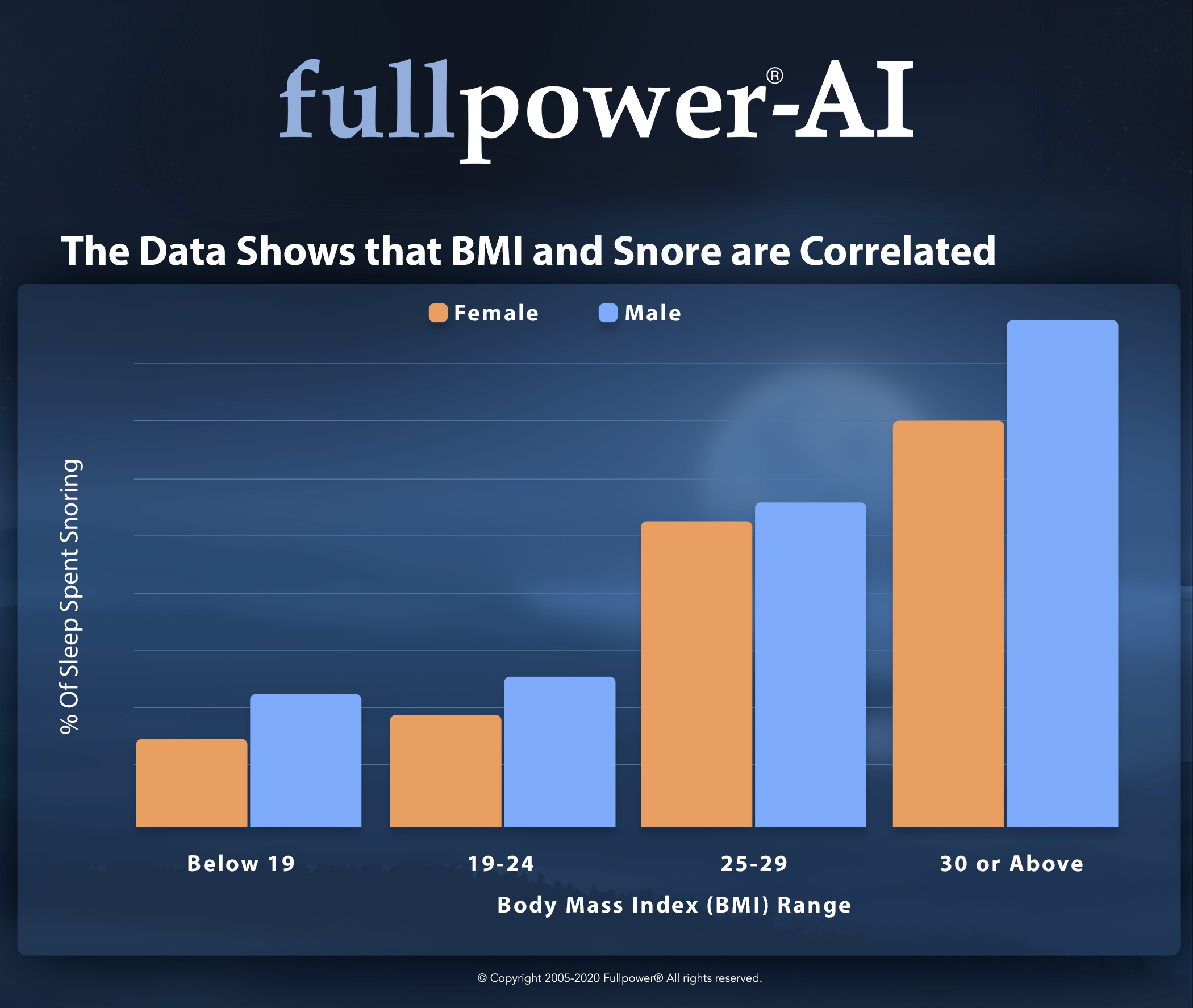
Sleeptracker-AI data shows that up to 40% of males over 40 snore — and women are not far behind. Snoring is a clinically recognized precursor to obstructive sleep apnea, making its population-level prevalence a meaningful health signal.
The data reveal a strong correlation between snoring and BMI. The directionality of that relationship is worth examining carefully. Does elevated BMI drive snoring — and by extension, increase apnea risk? Or does snoring-related sleep fragmentation disrupt the hormonal and metabolic processes that regulate body weight, contributing to BMI increase? The correlation is clear in the data; causality is likely bidirectional.
A third possibility follows from the same logic: for snorers, reducing snoring improves sleep quality, and improved sleep quality correlates with lower BMI. If that pathway holds, snore reduction may function as an indirect lever on body weight — not just a sleep quality intervention, but a metabolic one.

About Fullpower-AI®
Our mission is to make advanced AI biosensing universally accessible, empowering better sleep, Remote Patient Monitoring (RPM), and healthspan through real-time, science-validated intelligence.