News
Do Moon Phases Affect Our Sleep Patterns?
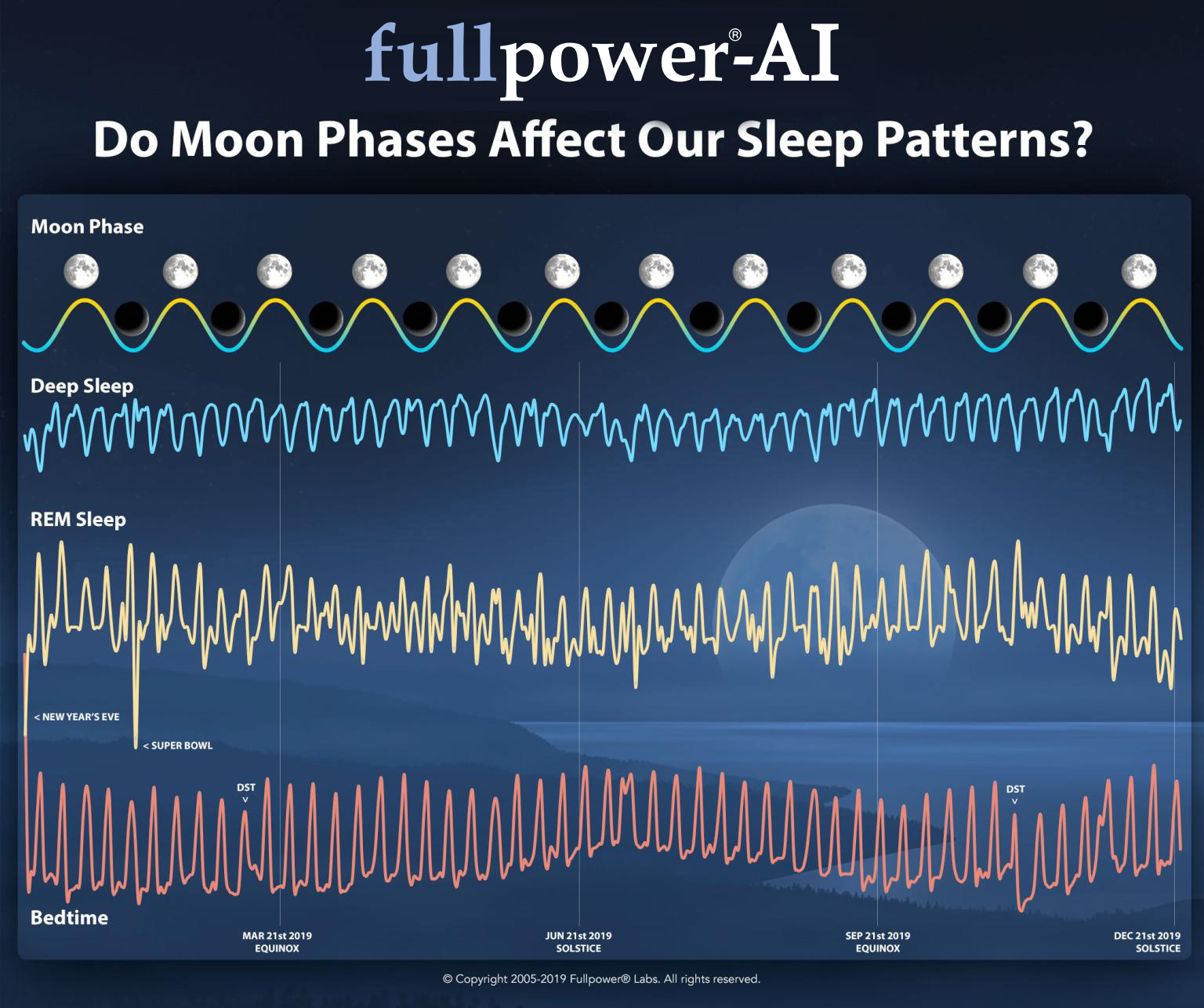
Sleeptracker-AI data offers a population-scale lens on a question that has persisted across cultures and centuries: do lunar cycles measurably influence human sleep?
The dataset is large enough to detect subtle periodic signals — and prominent outliers are visible. New Year’s Eve and Super Bowl night stand out clearly as discrete sleep disruption events, driven by well-documented behavioral factors. Moon phases, however, do not produce a comparable signal. The data do not support a meaningful correlation between lunar cycles and sleep patterns at the population level.
The evolutionary intuition is understandable. Before artificial light, the full moon represented a genuine environmental variable — increased ambient illumination with real implications for nocturnal behavior and predator risk. Whether that ancestral sensitivity persists in modern populations, at a scale detectable in the data, is what the analysis was designed to test. The answer, at least in the Sleeptracker-AI dataset, is that it does not.
About Fullpower-AI®
Our mission is to make advanced AI biosensing universally accessible, empowering better sleep, Remote Patient Monitoring (RPM), and healthspan through real-time, science-validated intelligence.